SpO₂ Compatibility 101: Matching Sensors to Your Monitor
Learn how to prevent costly SpO₂ compatibility failures, understand protocol families, and implement best practices for reliable patient monitoring.
Read article
 USA
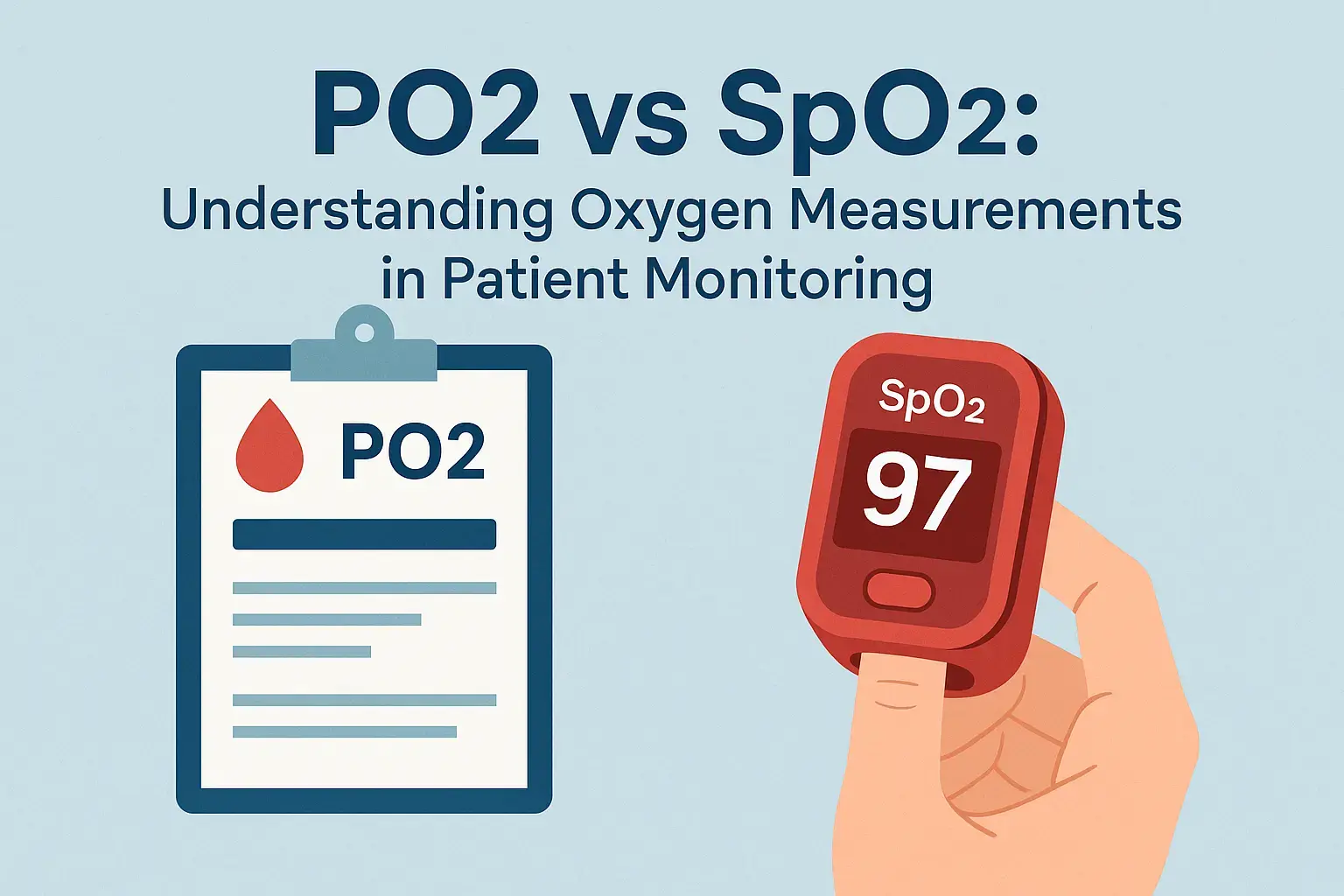
USASpO2 is peripheral oxygen saturation estimated by pulse oximetry (%). PO2 is the partial pressure of oxygen; when measured in arterial blood it is called PaO2 (mmHg) and comes from arterial blood gas analysis. They are related through the oxyhemoglobin dissociation relationship but are not interchangeable.
| Feature | PO2 / PaO2 | SpO2 |
|---|---|---|
| What it represents | Partial pressure of oxygen dissolved in blood (PaO2 when measured in arterial blood) | Peripheral oxygen saturation estimated by pulse oximetry |
| How it is measured | Arterial blood gas (ABG) analysis | Pulse oximeter sensor (finger, ear, forehead, or similar site) |
| Units | mmHg (or kPa) | % |
| Invasive? | Yes (arterial blood sample) | No (continuous, noninvasive) |
| Typical clinical use | Gas exchange assessment, respiratory failure workup, ventilation management, confirmatory testing | Continuous bedside monitoring and trend detection of desaturation |
PO2 means the partial pressure of oxygen—the pressure exerted by oxygen dissolved in a gas mixture or in blood plasma.
In patient monitoring and arterial blood gas (ABG) interpretation, clinicians usually mean PaO2: the partial pressure of oxygen measured in arterial blood. PaO2 reflects how well oxygen has moved from the lungs into arterial plasma.12
Using precise language matters:
In many teaching references, a common adult PaO2 reference range on room air at sea level is about 80–100 mmHg, though expected values can vary with age, altitude, and clinical context.1
PaO2 is obtained from an arterial blood gas sample, typically analyzed on a blood-gas analyzer. An ABG can also report related values such as pH, PaCO2, and calculated or measured oxygen saturation, depending on the analyzer and workflow.1
Because ABG sampling is invasive and intermittent, it is used when a more complete assessment of oxygenation, ventilation, or acid–base status is needed—not as a continuous replacement for pulse oximetry.
SpO2 is peripheral oxygen saturation estimated noninvasively by pulse oximetry. A pulse oximeter uses light absorption at specific wavelengths to estimate the percentage of hemoglobin saturated with oxygen and displays that estimate as SpO2.32
SpO2 is widely used because it is continuous, rapid, and does not require a blood draw. In many care settings it functions as a standard monitoring parameter for detecting desaturation trends.3
Published educational and device-safety sources commonly note that pulse-oximeter readings can be affected by factors such as poor circulation, motion, nail polish, and skin pigmentation, and that displayed SpO2 is an estimate with a range of uncertainty.43
SaO2 is arterial oxygen saturation associated with arterial blood analysis. SpO2 is a noninvasive estimate intended to approximate arterial saturation, but SpO2 and SaO2 are not identical concepts and can diverge—especially when pulse oximetry is limited or when dyshemoglobins are present.21
When clinical findings and SpO2 disagree—or when carboxyhemoglobin or methemoglobin is a concern—blood-based testing (including CO-oximetry when indicated) provides information pulse oximetry alone may not.2
No. SpO2 and PaO2 do not measure the same physiologic quantity.
Most oxygen in blood is carried by hemoglobin; only a smaller portion is dissolved in plasma. That is why the two numbers use different units (mmHg vs %) and answer different clinical questions—even though they are related.12
PaO2 and oxygen saturation are related through the oxyhemoglobin dissociation relationship (commonly shown as the oxyhemoglobin dissociation curve). The relationship is non-linear: at higher PaO2 values, saturation changes relatively little, while on the steeper portion of the curve, smaller PaO2 changes correspond to larger saturation changes.2
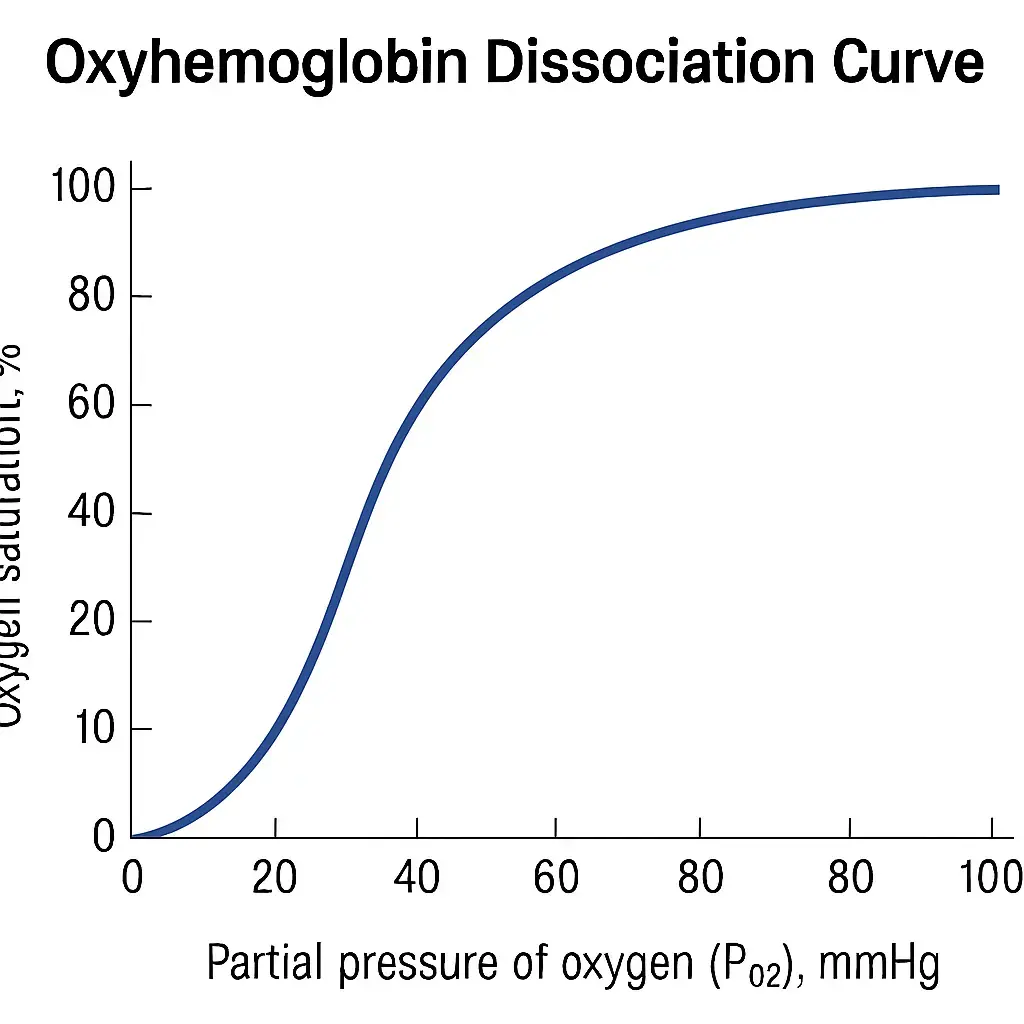
Factors such as temperature, pH/PaCO2, and 2,3-DPG can shift hemoglobin’s oxygen affinity and therefore change the PaO2–saturation relationship for a given clinical state.2 SpO2 should be interpreted with the patient’s physiology and clinical context—not as a standalone substitute for PaO2.
SpO2 and PaO2 can appear “discordant” for technical and physiologic reasons. Important, well-supported contributors include:
FDA consumer and device-safety materials emphasize that pulse oximeters estimate blood oxygen and have a risk of inaccuracy under certain circumstances; readings should be considered together with signs, symptoms, and clinical judgment.4
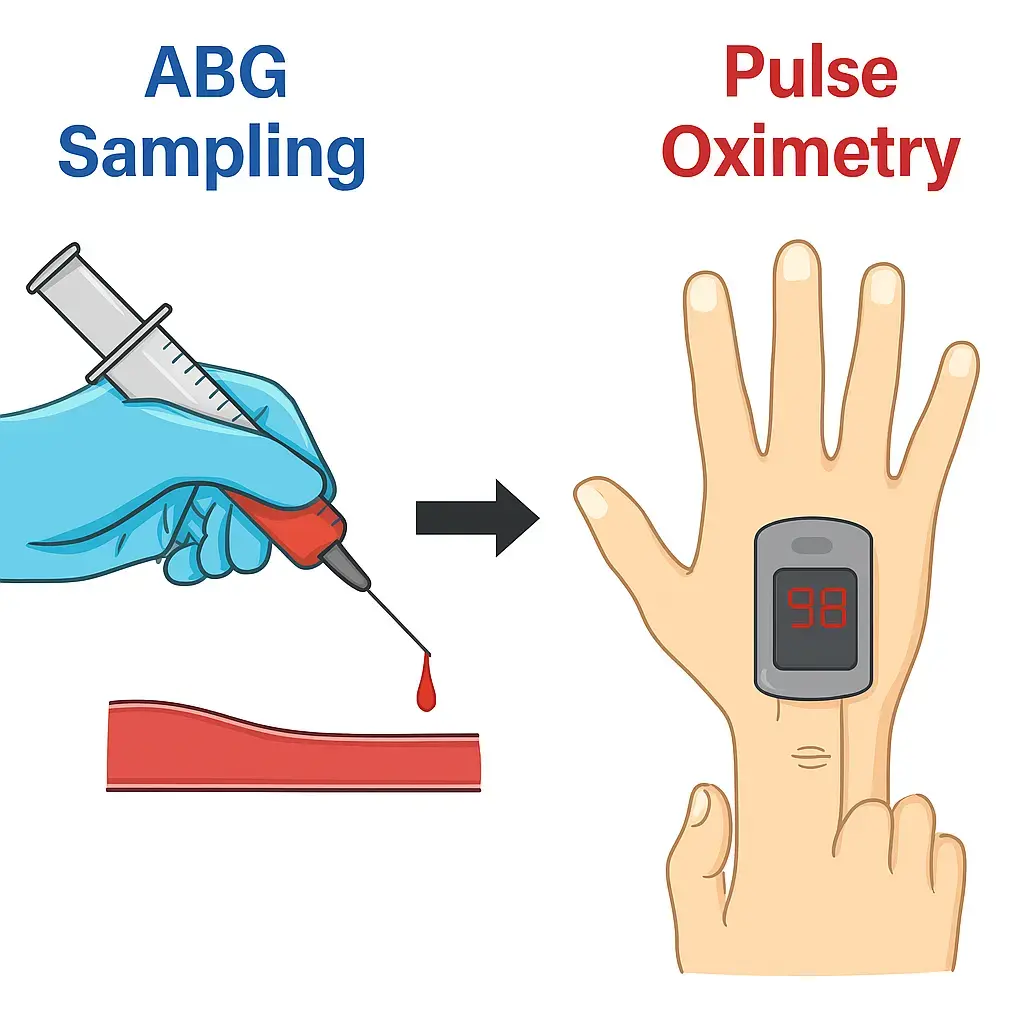
Pulse oximetry is excellent for continuous monitoring. An ABG is more useful when clinicians need information SpO2 cannot provide alone, such as:
This guide is educational and does not replace institutional protocols or individualized clinical decision-making.
Reliable SpO2 monitoring depends on more than the displayed percentage. Sensor fit, site selection, perfusion, and monitor–sensor compatibility all influence whether the pulse oximeter can produce a usable signal.
If your team is selecting replacement sensors or troubleshooting no-reading events, start with compatibility and form-factor guidance:
This content is provided for educational and informational purposes only. It is not medical advice and should not be used as a substitute for professional clinical judgment, institutional protocols, or manufacturer instructions for use. Always follow your facility’s policies and consult qualified clinicians for patient-specific decisions.
Keep reading
More articles you may find helpful from the Medten blog.