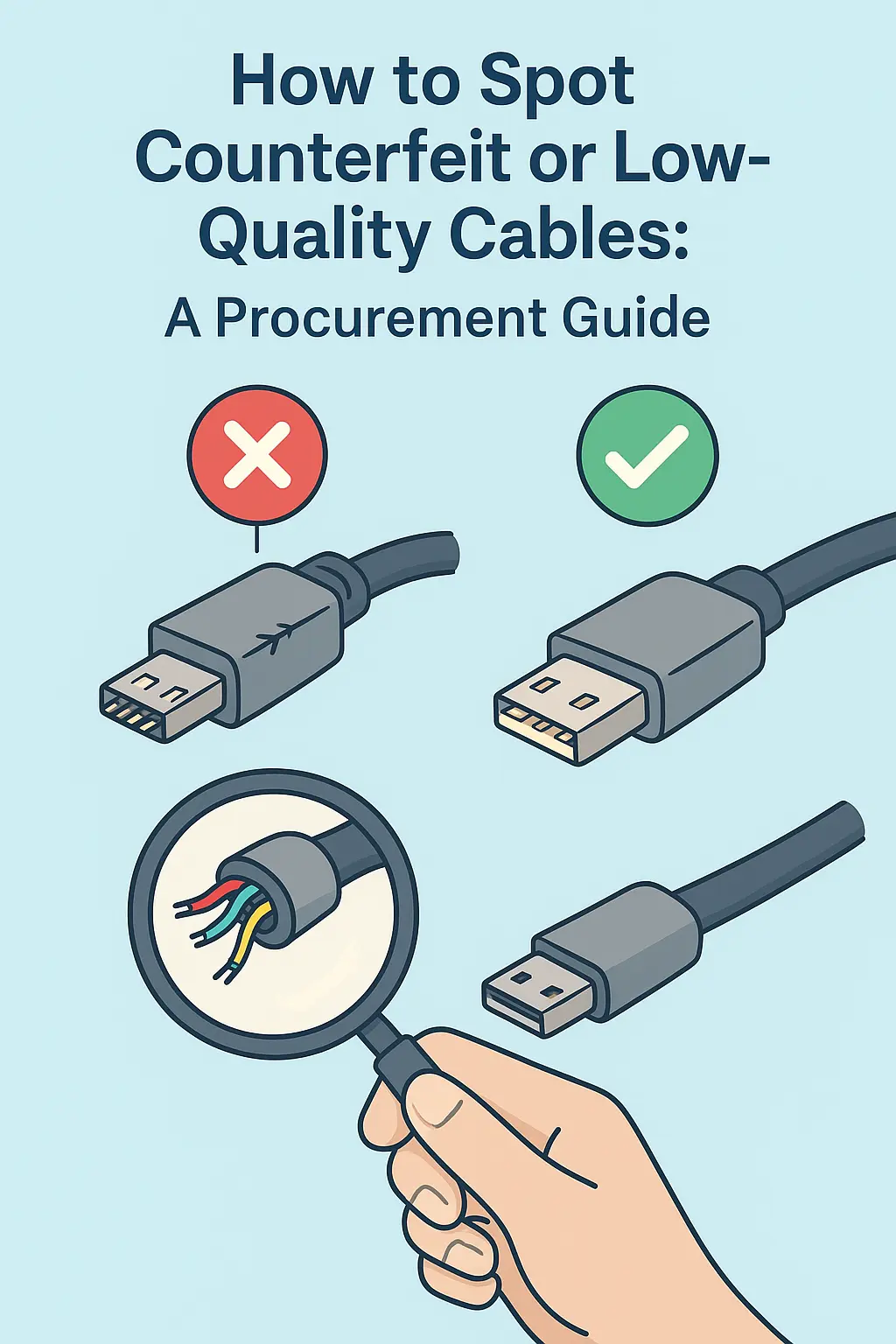
Introduction: Why Counterfeit Accessories Are a Growing Risk
For procurement teams, the stakes are high when sourcing patient monitoring accessories. On the surface, cables may look identical — an ECG leadwire with the same connector, an SpO₂ sensor with a similar clip, or a NIBP hose with the same fittings. But beneath the surface, counterfeit or low-quality accessories can put patients at risk, shorten equipment life, and increase long-term costs.
With more distributors entering the market, it's critical for hospitals to distinguish between certified compatible accessories and unsafe look-alikes. This guide explains the warning signs of counterfeit or low-quality products and how procurement teams can avoid costly mistakes.
1. Incomplete or Incorrect Labeling
What to look for:
- Clear manufacturer information, lot numbers, and compliance marks (FDA, CE, ISO).
- Durable, legible labels that match documentation.
Red flag: Labels with spelling errors, missing regulatory marks, or inconsistent branding.
2. Lack of Documentation or Certification
What to look for: Suppliers who provide FDA registration, CE certificates, ISO 13485 audits, and test reports upon request.
Red flag: Vendors who avoid sharing documentation, claim it isn't necessary, or send incomplete paperwork.
3. Poor Build Quality
What to look for:
- Smooth, durable cable jackets.
- Properly molded connectors and intact strain relief.
- Secure pins without corrosion or bending.
Red flag: Loose connectors, thin insulation, rough molding, or visible cracks in the jacket.
What to look for:
- Stable waveforms and readings during use.
- No frequent "Leads Off," "Check Probe," or "No Signal" messages.
Red flag: Erratic traces, frequent disconnections, or inconsistent readings — especially if issues improve when switching to a known-good cable.
5. Unrealistic Pricing
What to look for: Pricing that is competitive but in line with other certified compatible suppliers.
Red flag: Prices dramatically lower than market standards — often a sign of counterfeit, recycled, or untested parts.
Compare quality expectations with how cable quality affects monitoring accuracy and OEM vs compatible cables for biomedical engineers.
OEM vs. Compatible vs. Counterfeit: The Key Distinction
- OEM (Original): Produced by the monitor manufacturer, guaranteed compatible, highest cost.
- Compatible (Certified): Produced by trusted manufacturers like Orantech and distributed by Medten. Fully tested, compliant, safe, and cost-effective.
- Counterfeit/Low-Quality: Unverified, often lacking documentation, built with inferior materials, and a risk to patient safety.
Medten specializes in certified compatible accessories, never counterfeits — giving procurement teams confidence that their purchases meet international standards and protect both patients and staff.
For compliance verification steps, see what to verify for FDA and ISO 13485 before sourcing.
Quick Procurement Checklist
Before purchasing, ask:
- Does the product carry FDA, CE, and ISO certification?
- Can the supplier provide documentation on request?
- Do the cables and connectors pass a physical inspection?
- Are performance issues ruled out through sample testing?
- Does the price align with trusted suppliers?
How Medten Protects Procurement Teams
Medten distributes a full range of certified compatible patient monitoring accessories — including ECG cables, SpO₂ sensors, NIBP hoses, IBP kits, and temperature probes. Every product is:
- Manufactured under strict ISO 13485 and FDA/CE standards.
- Tested for durability, compatibility, and signal integrity.
- Backed by responsive support and a global distribution network.
Conclusion + Call to Action
Counterfeit accessories aren't just a budget problem — they can disrupt care and compromise patient safety. By learning the signs of poor quality and insisting on certified compatible products, procurement teams can protect their hospitals and patients.
Explore Medten's certified compatible accessories catalog